What Is a Power Flush and Should I Get One for My Buckinghamshire Home?

If your home’s radiators are struggling to warm up or your energy bills are creeping higher, the culprit might not be a faulty boiler. Over time, central heating systems naturally accumulate a dark, muddy sludge made of rust particles, black iron oxide, and mineral deposits.
To restore your heating to peak performance, protect your equipment, and lower your carbon footprint, a professional power flush is often the most effective solution.

As a leading provider of energy-efficient heating across Buckingham, Green Mechanical Solutions (GMS) has put together this guide to explain how power flushing works, the key signs your system needs one, and how it protects your future heating investments.
What is a Power Flush?
A power flush is an intensive cleaning process used to clear out the build-up of sludge, magnetic iron oxide, and debris from inside your pipes, radiators, and heat exchangers.
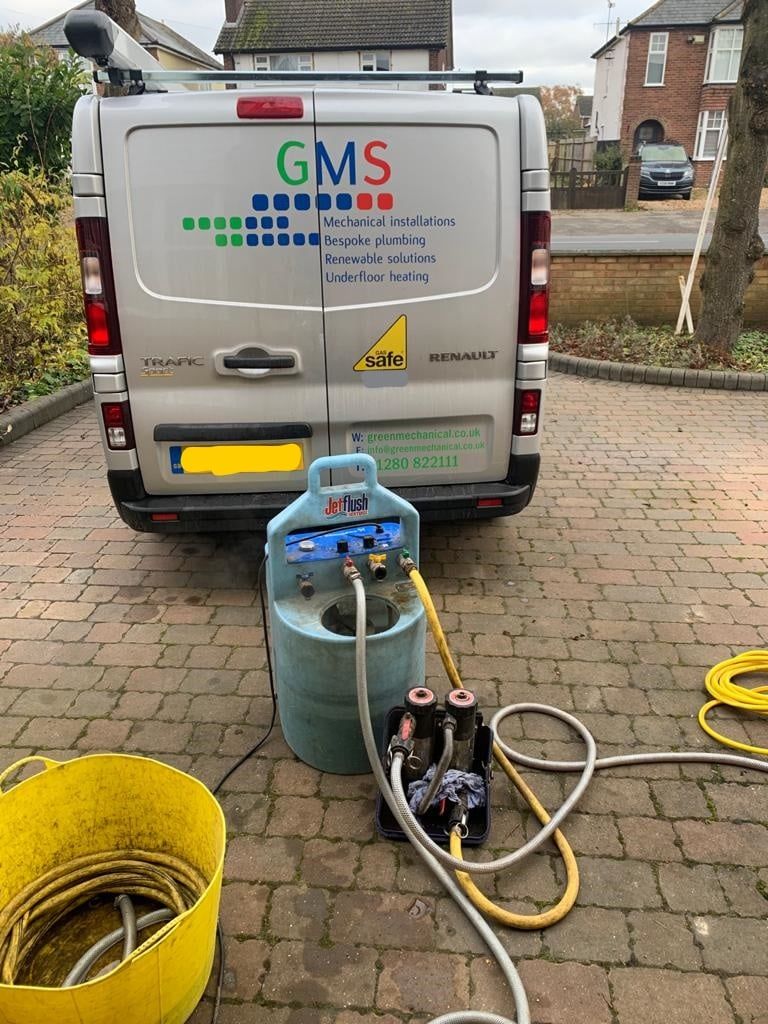
During a flush, an engineer connects a specialised high-velocity, low-pressure pumping station to your central heating network. By sending a heavy flow of water mixed with targeted cleaning chemicals through the circuit, the engineer dislodges stubborn blockages without putting dangerous structural pressure on your pipework. This process aligns directly with the heating maintenance standards outlined by the British Standards Institution (BSI).
How Often Should You Power Flush Your Heating System?
Most heating experts recommend having a professional power flush performed every 5 to 10 years as part of a robust preventative maintenance strategy. Combining a semi-regular flush with your mandatory annual boiler service keeps your home cozy, reduces unexpected breakdowns, and satisfies manufacturer warranty terms.
5 Clear Signs Your Central Heating System Needs a Power Flush
You do not always have to wait a decade to schedule system maintenance. If you live in Buckinghamshire and notice any of the following symptoms, your system is likely crying out for a deep clean:
- Cold Bottoms on Radiators: If the top of your radiator is warm but the bottom remains ice-cold, dense sludge has settled at the base, completely blocking the flow of hot water.
- Black Water During Bleeding: When you bleed your radiators to let out trapped air, the escaping water should be relatively clear. If it is thick, dark, or black, iron oxide rust is actively corroding your system.
- Slow Warm-Up Times: If it takes hours for your house to reach a comfortable temperature even though your boiler is running at full capacity, internal debris is choking heat transfer.
- Noisy Boiler Operations: Sludge sitting inside the heat exchanger can cause localised boiling, resulting in banging, whistling, or kettling sounds.
- Frequent Circulator Pump Failures: The black grime is highly abrasive. If your system's internal pump keeps seizing or breaking down, it is likely choked with magnetic sediment.
What to Expect During a GMS Power Flush Procedure
A comprehensive power flush requires professional tools and expertise. When a GMS engineer arrives at your home in Buckingham or the surrounding villages, they follow a meticulous multi-step process:
- Equipment Setup: We connect our high-flow pumping station directly into your central heating circuit, ensuring your carpets and furniture are completely protected from any system wastewater.
- High-Velocity Flushing: We pass fresh water through the entire system in both directions. The engineer will isolate individual radiators, using a mechanical agitator tool to break up stubborn, compacted pockets of sludge.
- Chemical Neutralisation & pH Testing: Once the water runs perfectly clear, a chemical neutraliser is introduced to wash away any remaining cleaning agents. We perform a precise pH test to guarantee the water is balanced and non-acidic.
- Inhibitor Protection: Finally, we inject a premium chemical inhibitor into your clean system. This protective barrier seals the metal surfaces inside your radiators, significantly slowing down future rust and sludge accumulation.

Depending on the size of your Buckinghamshire property and the number of radiators you have, the entire process takes anywhere from 4 hours to a full working day.
When Is a Power Flush Not the Best Option?
While power flushing is highly effective, it is not a cure-all for aging or critically failing heating infrastructure.

- Weakened, Leaking Pipes: The high velocity of a flush can occasionally expose existing pinhole leaks in heavily corroded, thin-walled copper pipes or old steel radiators.
- Broken Mechanical Components: If your motorised zone valves or internal boiler parts are mechanically broken, a flush will not fix them.
- Outdated Heating Systems: If your boiler is more than 15 years old, investing money into flushing old technology is often a false economy. In these instances, upgrading to a modern system offers much greater long-term financial returns.
Recent Posts